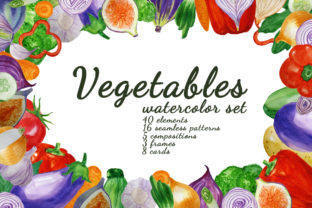
Watercolor Vegetables: A Versatile Artistic Resource
Watercolor vegetables refer to a collection of artistic elements that depict various vegetables in a watercolor style. These elements are often used in design projects, offering a unique and visually appealing aesthetic. The collection includes a wide range of items such as 40 watercolor elements, 16 seamless patterns, 8 card templates, a wreath, 5 compositions, and 3 frames. This comprehensive set is ideal for creative professionals and hobbyists looking to enhance their design work with a natural, handcrafted feel.
The images in this pack are available in both PNG and JPG formats, ensuring compatibility with different design software and platforms. All files are high-resolution, measuring 5000 x 5000 pixels at 600dpi, which makes them suitable for both digital and print applications. The patterns are provided on white and dark green backgrounds, while the PNG versions come without a background, allowing for greater flexibility in design integration.
Why Watercolor Vegetables Might Interest You
For designers, artists, and creators, watercolor vegetables can serve as a valuable resource. Their organic, hand-painted look adds a touch of warmth and authenticity to any project. Whether you're working on packaging, fabric printing, or web design, these elements can bring a fresh and inviting visual style to your work. The variety of items included in the collection ensures that there's something for every creative need, from simple illustrations to complex compositions.
One of the key advantages of this collection is its versatility. The seamless patterns can be used to create backgrounds or textures, while the card templates provide ready-to-use designs for invitations, greeting cards, and more. The wreath and compositions offer additional options for decorative elements, making it easy to incorporate watercolor vegetables into a wide range of projects.
Benefits and Considerations
The primary benefit of using watercolor vegetables is their ability to add a unique, artistic flair to design work. Unlike generic clip art or stock images, these elements have a distinct, handcrafted quality that can elevate the overall look of a project. The high resolution and multiple file formats also make them suitable for both digital and print use, ensuring that they meet professional standards.
However, there are some considerations to keep in mind. The specific nature of the watercolor style may not be suitable for all projects. For example, if a client prefers a more modern or minimalist aesthetic, watercolor vegetables might not align with their vision. Additionally, the size and complexity of the collection may require some time to organize and integrate into existing workflows.
Another factor to consider is the intended use of the collection. While it's ideal for creative projects such as packaging, fabric printing, and scrapbooking, it may not be the best choice for more technical or data-driven designs. The focus on visual appeal means that the collection is best suited for projects where aesthetics play a significant role.
Situations Where Watercolor Vegetables Excel
Watercolor vegetables are particularly well-suited for projects that emphasize creativity, nature, or a handmade feel. For instance, in package design, these elements can help create a visually engaging and memorable product appearance. In fabric printing, they can add an artistic touch to clothing, accessories, or home decor items.
The card templates and compositions are excellent for creating custom invitations, greeting cards, or promotional materials. The seamless patterns can be used to design backgrounds for websites, blogs, or social media posts, adding a cohesive and stylish element to the overall design. For scrapbooking or personal projects, the collection offers a range of elements that can be mixed and matched to suit individual styles and preferences.
When Alternatives Might Be Better
In some cases, alternatives to watercolor vegetables may be more appropriate. If a project requires a more abstract or geometric style, for example, other types of graphic elements may be better suited. Similarly, if the goal is to create a highly functional or minimalistic design, the intricate details of watercolor vegetables could be overwhelming.
For those who prefer digital or vector-based graphics, alternatives such as SVGs or vector illustrations might offer greater scalability and flexibility. Additionally, if a project requires a more consistent or uniform look, the variety of elements in the watercolor vegetables collection could introduce inconsistencies that need to be carefully managed.
Practical Decision-Making Insights
When deciding whether to use watercolor vegetables, it's important to consider the specific goals of the project. Ask yourself whether the organic, hand-painted look aligns with the desired aesthetic and message. Also, think about the practical aspects, such as file format compatibility, resolution requirements, and ease of integration into existing design workflows.
It's also helpful to evaluate the target audience. If the project is aimed at a market that values craftsmanship, sustainability, or natural themes, watercolor vegetables could be a strong fit. However, if the audience prefers a more modern or tech-focused approach, other design elements may be more effective.
Finally, consider the time and resources required to work with the collection. While the variety of elements is a strength, it may also require more effort to organize and apply effectively. Testing the elements in a small project before committing to a larger one can help determine whether they meet the needs of the design team or individual.